Sceye HAPS Specifications That Include Payload, Endurance And Breakthroughs In Battery
1. Specifications Tell You What the Platform Will Actually Do
There’s a tendency in the HAPS industry to talk about ambitions rather than engineering. Press releases provide coverage areas along with partnership agreements and commercial schedules, but the tougher and more interesting discussion is about specifications — what the vehicle actually holds and how long it remains in operation, and what systems of energy make continuous operation feasible. For anyone trying to understand whether a space-based platform is real-time mission-capable or remains in the development phase of promising prototypes, capacities for payloads, endurance estimates, and battery performance are the places where the essence lives. Inconsistent promises to “long endurance” and “significant payload” can be easily interpreted. Delivering both simultaneously at high altitude is the engineering hurdle which differentiates credible announcements from fanciful announcements.
2. Lighter-than-Air Architecture Changes the Payload Equation
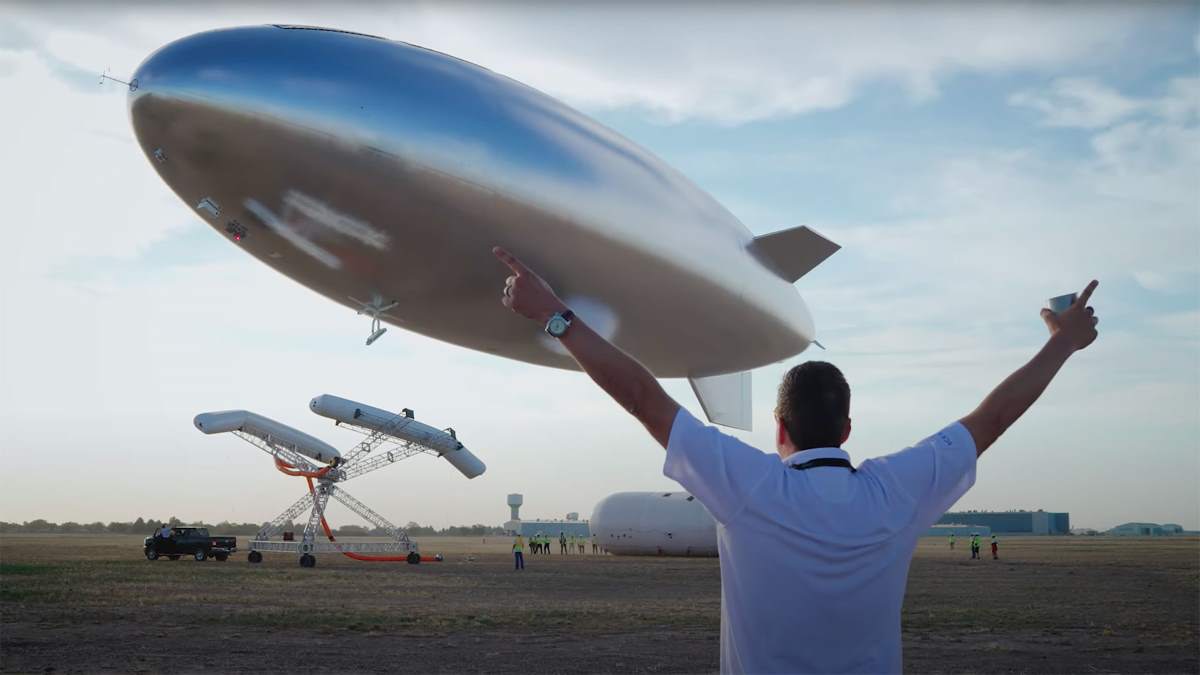
The fundamental reason Sceye’s airship design is able to transport a substantial payload is due to buoyancy taking care of the primary task of ensuring that the vehicle is airborne. This is a significant distinction. Fixed-wing solar aircrafts have to generate aerodynamic lift indefinitely, which requires energy and also imposes structural restrictions which limit the extra weight the vehicle can transport. A floating airship in the stratosphere does not expend energy fighting gravity in the same manner — this means that the power generated by its solar array and the capacity of the vehicle, could be directed towards stationary keeping, propulsion and the operation of the payload. It’s the result of an increased payload capacity than fixed-wing HAPS designs in the same endurance will struggle to match.
3. Payload Capacity determines mission versatility
The value of a greater capacity for payloads becomes apparent in the context of what stratospheric assignments actually require. The payload of telecommunications – antenna systems as well as signal processing hardware beamforming equipment — carries real weight and volume. So does a greenhouse gas monitoring suite. The same goes for a wildfire detection in the form of an Earth observation package. For each mission effectively needs hardware with a mass. In order to run multiple missions simultaneously, you need more. Sceye’s airship specifications were developed by the premise that a stratospheric vehicle should be able to carry a genuinely efficient combination of payloads, rather than requiring users to choose between observation and connectivity since the vehicle cannot accommodate both simultaneously.
4. Endurance is Where Stratospheric Missions Are Winners or Losers
A platform that can reach stratospheric elevation for 48 hours before needing to fall is an excellent option for demonstrations. A platform which can stay in position for a period of weeks or months at during the course of creating commercial services. The distinction between those two outcomes is an energy story — specifically, whether or not the vehicle is able to produce enough solar energy during daylight to power all of its devices and recharge the batteries sufficiently to allow full function through the night. Sceye endurance goals are based on the diurnal cycle considering the possibility of a sufficient energy supply for overnight usage not as a stretch objective but rather as the primary design requirement that everything else needs to be crafted around.
5. Lithium-Sulfur batteries are a real Step toward a Significant Change
The chemistry of the battery that powers conventional consumer electronics and electric vehicles -mainly lithium-ion — exhibits energy density characteristics that lead to real problems for stratospheric endurance. Every kilogram of mass carried high is a kilogram not available for payload, yet you’ll need a sufficient amount of stored energy to keep a big platform running through a tense night. Lithium-sulfur chemistry changes this trade-off drastically. With energy density values that reach 425 Wh/kg, lithium-sulfur batteries will store significantly more power per pound than comparable lithium-ion batteries. For a weight-constrained vehicle where every milligram of the battery’s mass has an opportunity cost in payload capacity, this improvement in energy density doesn’t just happen just a matter of time, it’s significant.
6. Advanced Solar Cell Efficiency Technologies Are the Other Half of the Energy Story
The battery’s energy density is the measure of how much power you can save. The efficiency of solar cells determines the speed at which you replenish it. Both matter, and progress of one without advancement in the other results in a more lopsided energy architecture. Enhancements in high-efficiency photovoltaics — such as multi-junction designs that take in a wider spectrum in solar energy than conventional silicon cells have substantially improved the energy harvesting capability of solar-powered HAPS vehicles at all hours. Along with lithium sulfur storage, these developments make a truly closed power loop feasible: the ability to generate and store enough energy each day so that the system can run for an indefinite period without any external energy input.
7. Station-Keeping Draws Constantly from the Energy Budget
It’s easy to view endurance in terms of being in the air, but for a stratospheric structure, staying airborne is just one part of the equation for energy. station keeping — maintaining its position against the prevailing winds by continuous propulsion draws power continually and accounts for large proportions of energy usage. The energy budget needs to accommodate station keepers alongside payload operations, avionics, communications, and thermal management systems all at once. That’s why the specifications that state endurance, but don’t specify what systems are operating in that time are hard to measure. Genuine endurance figures assume full operational load and not a minimumly-configured vehicle that is coasting with payloads shut off.
8. The Diurnal Cycle is the Design Constraint All Other Things Does Flow From
Stratospheric engineers speak about the diurnal phase — the daily rhythm for solar energy availability- as the central factor in the framework around which the platform is based. During daylight the solar array must provide enough power for every system and charge the batteries up to capacity. In the evening, these batteries must provide power to all systems through the dawn hours without becoming unstable, degrading load performance, or entering any mode of reduced capacity that would disrupt a continuous monitoring or connectivity mission. Finding a vehicle capable of threading this needle without fail for day after day, over a period of months is the major technical challenge facing solar-powered HAPS development. Every specification decision including solar array size cell chemistry, battery efficiency, power draw for the payload -each feeds into this governing constraint.
9. This is because the New Mexico Development Environment Suits This Kind of Engineering
In the process of developing and testing a stratospheric airship requires infrastructure, airspace, and atmospheric conditions that aren’t easily accessible in all. Sceye’s base in New Mexico provides high-altitude launch and recovery capabilities, clear skies to conduct solar tests in addition to accessing the extended, uninterrupted airspace that sustained flight testing demands. Among aerospace companies in New Mexico, Sceye occupies a unique position — focused on stratospheric lighter-than-air systems, not rocket launch programs that are commonly seen in the vicinity. Its engineering rigor for the validation of endurance claims as well as battery performance under actual stratospheric conditions is precisely the type of work that benefits from a specialised test facility rather than random flight events elsewhere.
10. specifications that are able to withstand Scrutiny Are What Commercial Partners Demand
The reason that specifications matter more than technical considerations is that the commercial partners making investment decisions should be aware that the numbers actually exist. SoftBank’s plan to create a nationwide HAPS network for Japan which will offer pre-commercial services in 2026. It is based on the confidence that Sceye’s technology can operate as planned under real-world conditions and not just during controlled tests, but throughout the time a commercial network requires. Payload capacity that can stand up even with a complete telecommunications as well as observation suites endurance measurements that are validated through actual operations in the stratosphere and battery performance tested over actual diurnal cycle are what transform an exciting aerospace project into an infrastructure that a major telecoms operator is prepared to stake its plans for network expansion on. Follow the most popular sceye earth observation for more advice including whats the haps, what is haps, what are haps, 5G backhaul solutions, softbank sceye partnership haps, solar cell efficiency advancements for haps or stratospheric aircraft, whats haps, investment in future tecnologies, sceye haps status 2025 2026, softbank sceye partnership and more.
SoftBank’S Haps Pre-Commercial Services What To Expect In 2026
1. Pre-Commercial Is a Specific and Important Milestone
The terminology matters here. Precommercial services have separate phases of development of any new communications infrastructure — past the stage of experimental demonstration, past proof-of-concept flight campaigns, and then into the areas where real users enjoy real-time services under conditions that correspond to what a full commercial implementation would look like. This implies that the platform has been functioning reliably, and the signal is in compliance with quality standards that applications actually rely on and the ground infrastructure communicates with the stratospheric telecom antenna properly, and regulatory permits are in place to operate in areas that are populated. The achievement of pre-commercial status is not something to be considered a major marketing achievement. It’s a practical one, for which the reason SoftBank has made public statements about getting it to Japan in 2026 sets the bar for what the engineering on both sides of the partnership needs to reach.
2. Japan is the Best Country to Try This First
Picking Japan as the place to launch strategic pre-commercial services isn’t unintentional. Japan is home to a range of features which make it ideal for first installation environment. Its terrain — mountainous terrain as well as thousands of inhabited islands extensive and complex coastlines -pose genuine coverage issues that stratospheric equipment is designed to tackle. The regulatory environment it operates in is sophisticated enough to handle the airspace and spectrum questions that stratospheric operations raise. Its existing mobile network infrastructure operated by SoftBank will provide the integrated layer that the HAPS platform requires to connect to. And the inhabitants of the region have the device ecosystem as well as the digital literacy to make use of the world’s broadband services without requiring the time to adopt technology which could slow meaningful uptake.
3. Expect Initial Coverage to Focus on areas that are underserved and Strategically Important Areas
Pre-commercial deployments shouldn’t try to be able to cover all countries simultaneously. The more likely pattern is an individualized rollout that targets areas where the gaps between current coverage and what stratospheric connectivity can deliver is most pronounced as well as where the case for priority coverage is the strongest. In Japan’s situation, that implies island communities who are dependent on expensive and limited coverage from satellites. These include mountains, areas of rural in which the terrestrial economy has never provided adequate infrastructure and coastal zones where resilience to disasters is an important national objective due the risk of typhoon and seismic exposure in Japan. These areas provide both the most clear evidence of stratospheric connectivity’s worth and are the most important operational information to improve coverage, capacity and monitoring of platforms before the rollout to larger areas.
4. Its HIBS Standard Is What Makes Device Compatibility Possible
One of the main questions people could reasonably ask about stratospheric connectivity involves whether this requires special receivers, or can work with regular devices. Its HIBS Framework is High-Altitude IMT Base Station -provides a standards-based answer to that question. Through its conformance to IMT standards that underpin 5G and 4G networks across the globe, any stratospheric device operating as a HIBS will be compatible with the device and smartphone ecosystem that already exists in the area of coverage. For SoftBank’s pre-commercial services, the subscribers who are in area coverage should be in a position to access stratospheric connectivity through their existing devices without additional hardware. This is an essential requirement for any service that is aiming to reach out to the population of the remote regions who require other options for connectivity and are not well-positioned to make the investment in specialist equipment.
5. Beamforming can determine how Capacity Is Distributed
An stratospheric location that covers an expansive area can’t provide the same useful capacity across the footprint. How spectrum available and energy available to signal is distributed across the coverage area is a function of beamforming — the platform’s capability in directing signals to areas locations where demand and users are concentrated rather than distributing throughout the entire geographic area, which includes large areas of uninhabited. As part of SoftBank’s precommercial phase demonstration that beamforming derived from a stratospheric telecom antenna can provide commercially viable capacity to the specific populations within a large coverage area will be crucial as will proving coverage areas. Broad coverage area with a tiny, non-usable capacity has little value. Specific delivery of genuine acceptable broadband to defined area of service demonstrates the commercial model.
6. 5G Backhaul applications might predate Direct-to-Device Services
There are a few deployment scenarios where an early and easy to prove the feasibility of deploying stratospheric broadband isn’t direct broadband to consumers but 5G backhaul – connecting existing ground infrastructure in areas where terrestrial backhaul services are insufficient or unavailable. Remote communities may have some network equipment that is ground-level but lack the high-capacity connection to the network in general which makes it beneficial. A stratospheric network that offers that backhaul link extends functional 5G coverage in communities served by ground equipment that is already in place without needing end users to communicate with the stratospheric platform directly. This kind of scenario is easier to verify technically, provides the most precise and quantifiable benefit, and enhances operational confidence in the performance of the platform before the advanced direct-to devices service layer is added.
7. A Sceye’s platform performance in 2025 sets the stage for 2026.
The timeframe for pre-commercial services from 2026 is entirely dependent on the level of performance Sceye HAPS Sceye HAPS airship achieves operationally in 2025. Validation of stations-keeping, performance of payloads under real weather conditions, behavior of the energy system over multiple days, and integration tests needed to ensure that the platform’s interface is correct with SoftBank’s infrastructure for networks all have to be at a sufficient level of maturity before commercial services are able to begin. Updates on Sceye Airship Status for HAPS through 2025 therefore aren’t just minor news items — they are the most important indicators to determine whether 2026’s milestone is tracking in line or is accumulating the type financial debt that extends commercial timelines into the future. The technological progress that will be made in 2025 is the story that will be made in advance.
8. Disaster Resilience will be tested, not Just a Claimed One
Japan’s disaster-prone nature means that any service pre-commercially stratospheric operating within the country will certainly experience challenges — earthquakes, typhoons, disruptions to infrastructure — that make the platform more resilient and its utility as an emergency communications infrastructure. This isn’t a limitation of the context in which it is deployed. It’s one of its most beneficial features. The stratospheric platform which maintains the station while providing the ability to connect and observe during major weather or seismic event in Japan demonstrates something that no amount of controlled tests can reproduce. The SoftBank pre-commercial stage will yield actual evidence on how stratospheric infrastructure performs in case terrestrial networks become compromised and provide the exact evidence that potential operators in the countries that are exposed to disasters need to look at before committing to their own deployments.
9. The Wider HAPS Investment Landscape will react to what Happens in Japan
The HAPS industry has attracted significant investment from SoftBank and other companies, however the broader telecoms and infrastructure investors remain in the watchful eye. Large institutions, national telecoms service providers from other countries and government officials who are looking at stratospheric infrastructures for their own covering and monitoring needs are all tracking what happens in Japan with significant attention. The successful implementation of pre-commercial platforms — platforms on station operating, services in operation, and performances that meet thresholdsis likely to accelerate investment decisions across the industry in ways that continued demonstration flights and announcements about partnerships cannot. On the other hand, significant delays or performance issues will trigger the need for a re-calibration of timelines across the entire industry. The Japan deployment carries disproportionate weight for the entire stratospheric connection sector, and not just for those involved in the Sceye SoftBank partnership specifically.
10. 2026 will reveal if Stratospheric Connectivity Has Crossed the Line
There’s a distinction in the development of any disruptive infrastructure technology from the point where it’s promising, and the time when it’s fully realized. Aviation, electricity, mobile networks and the internet infrastructure all crossed this boundary at certain timesand not just when this technology first tested, but when it was beginning to function reliably that individuals and institutions started contemplating its existence rather then its potential. SoftBank’s pre-commercial HAPS offerings in Japan represent the most credible immediate scenario when connectivity across the stratospheric region crosses that line. The platform’s ability to keep station throughout Japanese winters, if the beamforming service is sufficient for island communities, and whether they can operate in the type of environment Japan typically experiences will determine whether 2026 is remembered as the year stratospheric internet became an actual infrastructure or if the timeline was re-set. Read the best softbank haps pre-commercial services japan 2026 for site recommendations including natural resource management, what does haps stand for, what does haps, Sceye Wireless connectivity, what are the haps, sceye softbank partnership, sceye haps project, what are high-altitude platform stations haps definition, Real-time methane monitoring, what haps and more.
